


OUR OBSERVATION
Dear Readers,
August was not a loud month in the base oil market, but it was not an easy one either.
For buyers in North America, the month probably felt a little calmer than May or June. Contract supply was in better shape, conversations were less frantic, and some grades were easier to plan around than they had been earlier in the summer. But that did not mean the market had loosened.
It felt more like everyone had learned how to operate in a tight market.
Buyers were more careful. Suppliers were more guarded. Refiners were watching inventories, hurricane season, diesel economics, and crude slate changes. Crude prices moved with the headlines, but base oils were being driven by a much bigger set of pressures.
The global situation still mattered, especially around the Strait of Hormuz and the Red Sea, but the real question for North American buyers was much closer to home: what supply could actually be counted on, and what would it cost to replace it?
August was a month where the market caught its breath, but it never really relaxed.
Quick Highlights – Group I, Group II, and Group III
The North American market looked steadier in August, but underneath the surface, buyers were still dealing with a lot of uncertainty.
Group I was not the weakest part of the market here. In other regions, Group I saw more pressure as demand slowed or local supply improved. Europe had the summer holiday effect, Brazil saw better domestic availability, and parts of Asia were still dealing with cautious buying. North America felt different.
U.S. refiners stayed disciplined. They were focused on contract customers, hurricane season inventory planning, and their own blending needs. That kept values supported even as other regions showed softer signals. For many buyers, Group I was manageable, but not something they could take for granted.
Bright stock remained the grade people had to watch. It was not just another Group I grade in August. It carried more risk because there are fewer easy replacements when availability tightens. That matters for heavier industrial and heavy-duty formulations, where a shortage can create real headaches.
Group II was where the North American story became more complicated.
Contract buyers were in a better position than they were earlier in the summer, but that does not mean extra supply was easy to find. N220 remained especially tight, and N100 and N600 were still dependent on the supplier. For buyers with steady contract coverage, August may have felt more manageable. For buyers looking for anything outside normal supply, it was still a difficult market.
The producer announcements in August helped confirm that tone. ExxonMobil, Petro-Canada, Chevron, Calumet, and Excel Paralubes/Phillips 66 all moved or announced increases, with Excel Paralubes/Phillips 66 set to move in September. Motiva was the only major producer that had not made a similar new announcement at the time. To us, the message was clear: producers are still protecting value, not chasing volume.
The reasoning is not the same for every producer, but the direction is similar. Petro-Canada’s increase stands out because of the larger transition coming in Canada. With HF Sinclair planning to retire the Mississauga base oil refining assets, the remaining life of that production carries more value. In our view, Petro-Canada has every reason to protect margin while that asset still operates.
ExxonMobil’s move also fits the current market. They appear to be valuing base oil against their own finished lubricant system. If those barrels can be used internally, there is little reason to sell them cheaply into the merchant market. If they do sell base oil, the value needs to make sense against what those same barrels can generate downstream.
Chevron’s increase looks different, but it may be just as important. The HF Sinclair supply agreement gives Chevron a stronger path into Canadian demand and select U.S. regions as the Mississauga transition moves forward. In our view, Chevron is not just replacing supply. They are positioning themselves to capture demand that had historically been tied to the Petro-Canada system. If that demand transfers successfully, Chevron may not have much loose availability for the foreseeable future.
That is why we do not see prices falling quickly, even if the Middle East situation improves. We believe elevated pricing will remain supported until Middle East logistics normalize, approved Group III flows return, and refiners regain access to the preferred crude and feedstock slates needed for stronger Group II and Group III production. Even after those flows improve, we would not expect the market to move straight into oversupply. A more realistic outcome is a period of balance, with prices sticky on the way down rather than falling quickly from the recent highs.
Asian Group II pricing added another layer to the story. Lower-priced material from Asia was creating pressure in some regions, especially Latin America, but it was not a simple fix for North America. Freight, timing, vessel availability, approvals, and the need for dependable supply all mattered. A lower number on paper does not help much if the barrel is difficult to move, late to arrive, or not the right fit for the formulation.
Diesel was one of the biggest reasons base oils did not fall apart in North America.
Refiners were running hard, but diesel inventories remained tight and fuel margins stayed strong. That matters because base oil does not live in a vacuum. If a refinery has stronger incentives to protect fuel production, base oil output has to compete for attention. This helped keep Group I and Group II supported even when buyers were pushing back on higher costs.
Crude slates also continued to affect the market. Refiners were still dealing with different crude inputs because of Middle East disruptions, and that can change base oil yields. In a market where every grade matters, those yield changes are not small details. They can affect what shows up, how much is available, and which grades stay tight.
Group III remained the hardest part of the market.
Approved material was still critically short, and 4cSt was the grade causing the most stress. It is used in so many formulations that tightness there can quickly ripple into finished lubricants. North American sellers remained on allocation, and there was still no clear timing for normal Middle East replenishment.
This is where the global story hits North America directly. The Strait of Hormuz remained restricted, and the Red Sea continued to complicate regional movement. Other routes out of the Middle East could not replace normal flows, and shipping costs carried additional risk. For buyers who need approved Group III, that meant August still felt very exposed.
Some alternatives were available in discussion. Indian and Chinese Group III volumes were part of the conversation, and some buyers looked at Group II, Group II+, PAO, or re-refined material where formulations allowed. But these were not clean replacements for every product. If an approval is required, or if a customer specification is strict, flexibility becomes limited very quickly.
That is why the Group III issue feels different from a normal tight market. It is not just a price problem. In some cases, it becomes a production problem. If the right approved base stock is not available, certain finished lubricants cannot simply be made the same way.
Naphthenics were steadier, but they still had their own August story.
A lot of the same themes from July carried into August, but the reason they mattered was the widening gap between naphthenic and paraffinic values. Naphthenics remained more tied to crude, while paraffinic base oils were being supported by diesel economics, tight Group II, and the Group III shortage.
That kept naphthenics attractive where formulations allowed. Light grades remained the tighter side of the market, supported by transformer oil and metalworking demand. Mid and heavy grades were more balanced, with heavier grades still feeling softer demand from tire and rubber. Producers were cautious because substitution demand can look attractive, but it can also pull supply away from regular customers.
Latin America remained important, but mainly as a sign of how price-sensitive the market has become. Brazil saw better Group I availability and lower local values after refinery maintenance. Group II remained more dependent on imports, and buyers were looking toward Asia when U.S. material was too expensive or difficult to secure. Mexico stayed cautious, with high prices, tight credit, and limited U.S. availability continuing to weigh on demand.
The key takeaway for August is that North America was stable, but not comfortable.
Group I was supported, with bright stock still carrying the most concern. Group II was better for contract buyers, but not loose. Group III remained the biggest risk, especially approved 4cSt. Naphthenics were steadier, but the price gap to paraffinics kept substitution interest alive.
Closing Remarks:
August was not a true relief month. It was a pause. Buyers had more time to think, but not enough supply to feel relaxed. Refiners protected inventory and margins, while diesel kept the floor high.
RECENT HEADLINES
U.S. REFINERIES
HF Sinclair’s Lubricants & Specialties Segment Establishes Strategic Base Oil Supply Network Through Agreements with SK Enmove and Chevron
DALLAS, Texas–(BUSINESS WIRE)– HF Sinclair Corporation (NYSE: DINO) (“HF Sinclair”) today announced that its Lubricants & Specialties segment has entered into strategic long-term commercial agreements with SK Enmove, CIC of SK On Co., Ltd., and Chevron Products Company, a division of Chevron U.S.A. Inc., establishing a diversified base oil supply network to support customers across North America.
Under these agreements, SK Enmove will supply Group III base oils, and Chevron will supply Group II base oils to HF Sinclair’s Lubricants & Specialties segment. HF Sinclair’s Lubricant’s & Specialties business will serve as SK Enmove’s distributor for YUBASE Group III base oils in key regional markets in North America, while also distributing Chevron-branded Group II base oils in Canada and select regions of the United States.
“These agreements represent an important milestone in the evolution of our Lubricants & Specialties business,” said Matthew Joyce, Senior Vice President and President, Lubricants & Specialties segment. “By establishing strategic commercial arrangements with two globally recognized leaders in base oils – SK Enmove and Chevron – we are creating a diversified supply platform that combines world-class products, strong supply security and the technical expertise our customers have come to expect from Lubricants & Specialties.” Continue Reading Here
ConocoPhillips Names Andy O’Brien CEO as Ryan Lance Steps Down
ConocoPhillips has named Andy O’Brien as its next president and chief executive officer, marking a leadership transition at one of the world’s largest independent oil and gas producers.
O’Brien, currently the company’s chief financial officer and executive vice president of Strategy and Commercial, will take over on September 1 and join ConocoPhillips’ board of directors. Ryan Lance will retire as president and CEO but remain with the company as executive chairman in a transitional role.
The change brings to an end Lance’s 14-year tenure at the helm of ConocoPhillips. He has spent 42 years with the company and its predecessors and became CEO in 2012, the same year ConocoPhillips completed the separation of its refining and downstream operations into Phillips 66. Continue Reading Here
NON U.S. REFINERIES
BP to Take Full Control of Trinidad’s Calypso Gas Project
BP has agreed to acquire Woodside Energy’s 70% stake in the Calypso gas project offshore Trinidad and Tobago, increasing its ownership to 100% and making the British energy major operator of the development.
The deal covers Block TTDAA 14, an early-stage deepwater natural gas project that could eventually provide additional supply to BP’s established Trinidad and Tobago operations. The transaction remains subject to government and regulatory approvals and is expected to close by the end of 2026.
The acquisition consolidates BP’s position in a country where it already has substantial gas production and infrastructure. BP is the largest supplier of natural gas to Trinidad and Tobago’s domestic market and owns a 45% interest in the Atlantic LNG facility on the country’s southwest coast. Continue Reading Here
Aramco Signs $3.7 Billion in Deals With French Companies
Saudi Aramco has announced more than $3.7 billion in potential agreements with French companies as the oil giant moves to strengthen its supply chain and expand the use of artificial intelligence and other digital technologies across its operations.
The agreements and memorandum of understanding were announced during a French-Saudi investment roundtable attended by Aramco President and CEO Amin Nasser.
The package includes a corporate procurement agreement covering drilling equipment and a purchase agreement for oil country tubular goods, or OCTG, a category of steel pipe used in drilling and well construction. Continue Reading Here
THE CRUDE SIDE
Hormuz Traffic Remains Depressed as Iran and Oman Weigh Temporary Corridor
Vessel traffic at the Strait of Hormuz remains well below recent averages as Iran and Oman discuss a temporary shipping corridor in the key chokepoint that could lead to a kind of ‘interim’ reopening.
Only five commodity vessels moved in either direction in the Strait of Hormuz on Tuesday, roughly the same number as on Monday, but well below the 10-day average of 15 ships, according to ship-tracking data by Kpler as of early Wednesday.
Two tankers laden with liquefied petroleum gas (LPG) and one carrying bitumen transited the Strait outbound, while two empty product tankers moved inbound from the Gulf of Oman into the Persian Gulf, the data cited by Reuters showed.
Since August 22, the number of vessels crossing the Strait of Hormuz has gradually declined, from as many as 20 inbound, 14 outbound, and at least three transits in dark mode, data by maritime intelligence firm Windward showed. Traffic has slumped to as few as 4 inbound, zero outbound, and 3 dark crossings as of Monday. Continue Reading Here
U.S. Crude Stocks Barely Budge as Gasoline Inventories Fall
Crude oil inventories in the United States saw an increase of 100,000 barrels during the week ending August 21, according to new data from the U.S. Energy Information Administration (EIA) released on Wednesday. The increase brings commercial stockpiles to 428.9 million barrels, according to government data, which are now 1% above the five-year average for this time of year.
The EIA’s data release follows API’s figures that were released a day earlier, which reported that crude oil inventories had risen by 4.2 million barrels in the period.
Crude futures were trading down at 9:49 a.m. in New York, Brent futures were trading at $86.94 per barrel—down $1.58 (-1.78%) on the day and down nearly $5 per barrel from this same time last week. WTI was also trading down on the day, by $1.22 per barrel (-1.48%) on Wednesday morning at $81.14, down more than $4 per barrel since this time last week. Continue Reading Here
Surprising Fun Facts About the Oil Industry
- Oil helped create the modern credit card. – Some of the earliest widely used charge cards were issued by oil companies so drivers could buy fuel on the road without carrying cash.
- The first gas pumps were not built for cars. – Early pumps were often adapted from kerosene dispensing systems. The equipment existed before the automobile became the main customer.
- Oil companies once competed hard on restroom cleanliness. – In the early motoring era, clean restrooms became a serious marketing tool, especially for winning over traveling families.
- Some oil fields are so large they changed national economies. – A single giant field can transform a country’s tax base, export profile, infrastructure, currency strength, and political importance.
- The oil patch helped normalize hard hats. – Modern industrial safety culture grew across many heavy industries, but drilling, refining, pipelines, and terminals all helped make protective gear part of everyday work.
- Oil companies were early users of aerial surveying. – Before modern satellite mapping, planes were used to photograph terrain, trace structures, inspect pipelines, and scout remote areas.
- The oil industry made “octane” a household word. – Most people do not know what octane really measures, but oil marketing turned it into one of the most recognized fuel terms in the world.
- Some reservoirs need artificial lift almost from the start. – Not every well flows naturally for long. Pumpjacks, gas lift, and electric submersible pumps can be essential even when a field is still economically strong.
- Oil created entire port cities and export terminals. – Some ports became globally important not because of general cargo, but because they could store, blend, load, and ship crude or refined products at scale.
- The oil business is one of the few industries where a product can be priced before it physically exists. – Futures, forward contracts, hedging, and paper trading mean barrels can be bought and sold financially long before production, shipment, or delivery.
SUGGESTED READING
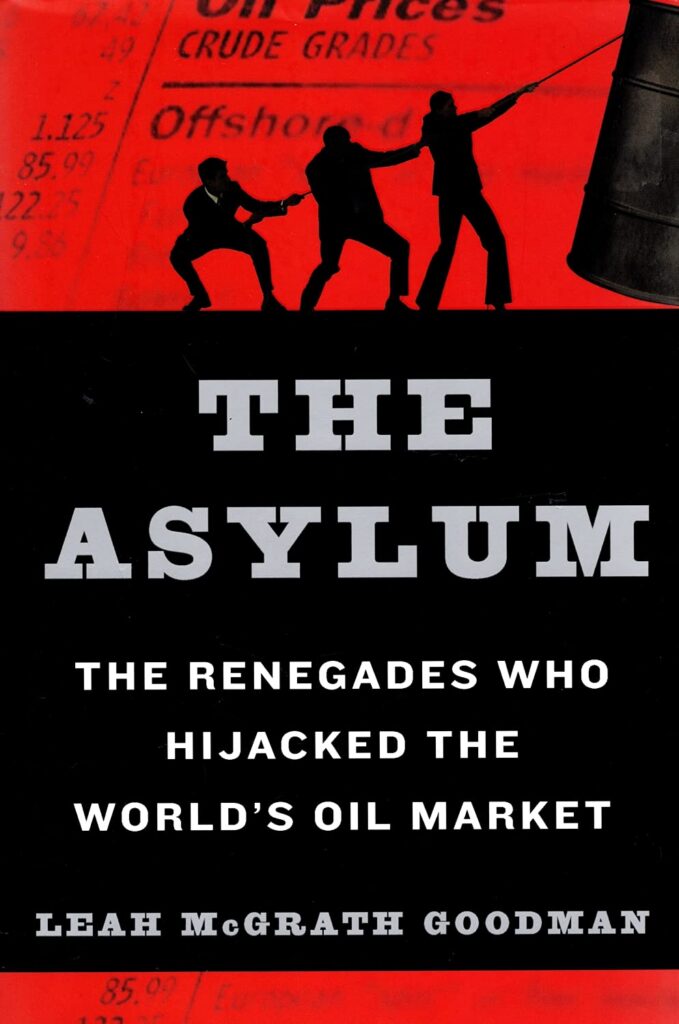
“The Asylum: The Renegades Who Hijacked the World’s Oil Market“ by Leah McGrath Goodman
The Asylum is a fast-moving look inside the rough, chaotic world of the New York Mercantile Exchange, where oil traders helped turn crude into one of the most important financial markets in the world. The book captures the noise, risk, egos, and pressure behind the trading floor, making it a fun read for anyone who likes oil, markets, and the personalities who helped shape modern energy trading.
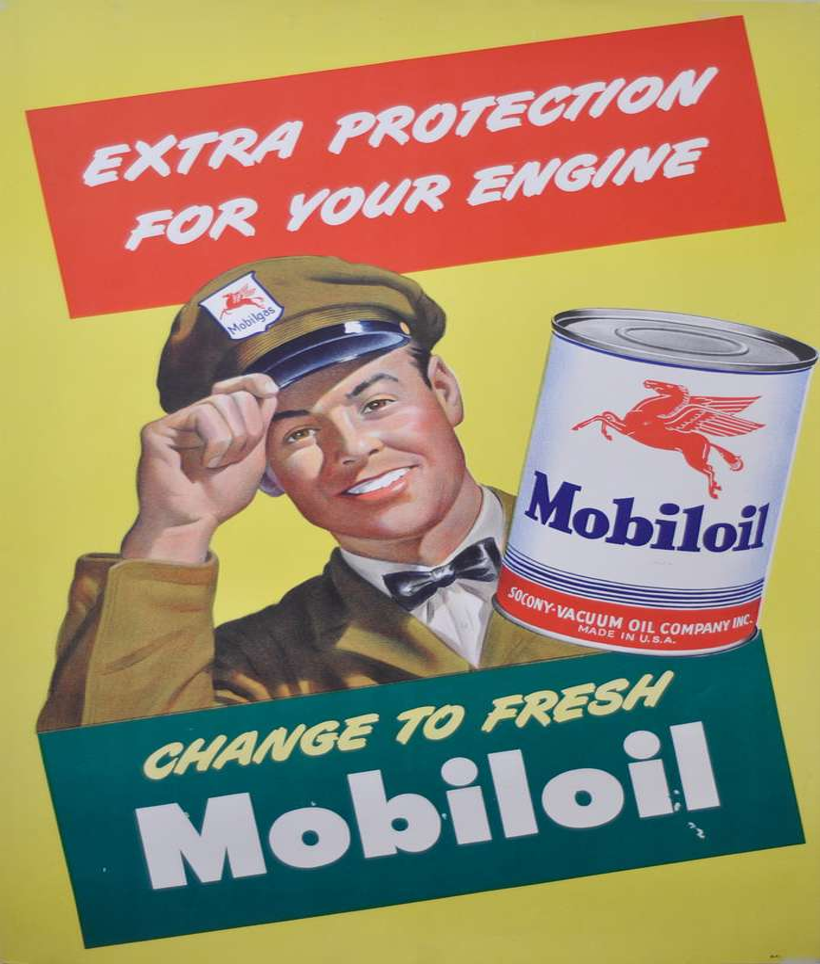
WE’VE COME A LONG WAY!
Thank you for joining us in this edition of the Beyond the Barrel Newsletter. Feel free to reach out to the Signal Fluid Solutions team for any inquiries or discussions.